The Role of several President in the History: 1909 to 1921
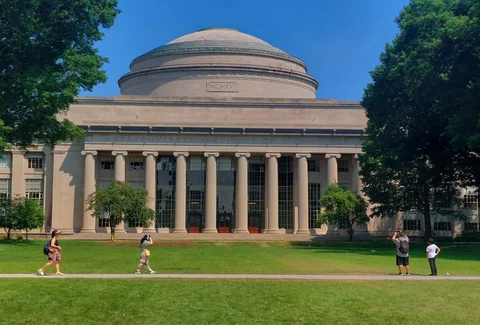
The Role of several President in the History of MIT? In 1909, Richard Cockburn Maclaurin assumed the position of President of MIT. When he took charge of the Boston-based university, it was in a severe financial crisis and under intense pressure to merge with Harvard University. At this time, using his exceptional diplomatic skills, Maclaurin contacted George Eastman (the founder of Kodak).
Between 1912 and 1920, he secured nearly $20 million in donations from him, which allowed him to strategically relocate the campus from Boston’s Back Bay to the Cambridge campus in 1916.
Maclaurin believed that MIT could not become world-class without a strong and modern infrastructure; therefore, by moving MIT to Cambridge, he saved it from merging with Harvard.
Subsequently, thousands of students joined the university. To mach Eastman’s donations and fill the gaps in lagging state support, President Maclaurin launched an industrial funding model in 1920 known as the ‘Technology Plan’.
For his institutional development work and diplomatic strategies at MIT, Maclaurin was named the ‘Architect of the ‘New Technology‘. Whereas the campus was previously known as “Boston Tech” during its time in the city of Boston.
After relocating the campus to Cambridge, new federal basic research initiatives, military branches, and private industrial organizations extended their cooperation.
As a result, MIT’s momentum accelerated rapidly, establishing it as one of the premier institutions for higher education, as well as a leading center for scientific and technological training.
In 1917, more than 47 students arrived here for an eight-week training program covering naval science, aeronautical engines, electricity, aircraft instruments, navigation, flight theory, photography, signaling, and weaponry handling.
For this, they were charged $10 for the first four weeks and $5 per week thereafter, excluding the costs for beds and bedding. As we all know, in 1918, the university received 33,240 applications for admission, out of which they admitted more than 1,364 students.
During this time, there were over 29,111 applications for admission, and more than 5,978 students were enrolled across various levels, including Undergraduate, Postgraduate, and PhD programs.
Ernest Fox Nichols assumed the presidency of the university in 1921, serving in the role of President for only a very short period of time.
The Role of several President in the History MIT: 1923 to 1948
In 1923, Samuel Wesley Stratton took office as President for a seven-year term. Before joining as the President of MIT, Samuel Wesley had served for a long time as the Director of the National Bureau of Standards in the United States.
When Samuel Wesley served as president at MIT, he solved various corporate challenges for many major companies and offered strategies for technological advancement.
Consequently, those companies provided substantial funding to MIT for research work. He utilized academic research for the benefit of industrial development.
During his tenure as president, Samuel Wesley began fostering an environment for advanced research at MIT. During his tenure, he placed special emphasis on MIT for the development of postgraduate programs such as Master’s and Ph.D. degrees. In 1928, Daniel Guggenheim hired talented teachers and scientists at MIT.
Along with establishing dormitories, meteorology, and aeronautical laboratories, he achieved progress in aviation and Wesley aerospace research.
Karl Taylor Compton assumed the presidency in 1930; he passed the ‘G.I. Bill’ to cover the higher education costs for soldiers returning from World War II.
During his tenure, he placed significant emphasis on fundamental sciences such as Physics and Mathematics. In 1940, he established a vast Radiation Laboratory for Master’s and PhD degree students.
While Samuel Wesley had begun creating an environment for advanced research during his tenure, Compton transformed MIT into a full-fledged research university.
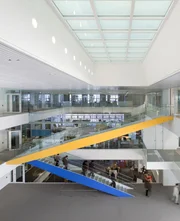
In 1948, James Rhyne Killian Jr. joined as the President of MIT. From 1949 onwards, he strengthened the departments of Social Sciences and Humanities and increased the links with government research.
The Role of several President in the History of MIT: 1951 to 1980
During his tenure, the number of scholarships and available seats at MIT increased significantly. In 1951, the Lincoln Laboratory was established to work on air defense systems for national protection.
Julius Adams Stratton joined MIT in 1959, and under his leadership, scholarships and student capacity continued to grow, surpassing 7,100 by 1960, with a Following 1970, Jerome Bert Wiesner assumed the role of President at MIT University (in 1971).
Under his leadership, Jerome Bert encouraged and developed various departments, including the arts, humanities, art galleries, technology and science, the ‘Council for the Arts’ program (in 1972), music, painting, and theater.
After becoming the president of MIT, he envisioned a place where departments such as media, computer science, and design would work together.To achieve this, he began raising funds, which eventually led to the establishment of the “MIT Media Lab.”

The university emphasized “Affirmative Action” policies, which subsequently led to an increase in the number of minority and female students on the MIT campus. Paul Edward Gray assumed the presidency in 1980, becoming the 14th President of MIT.
Paul Gray was first a student at MIT, after which he served as a professor, dean, chancellor, and finally, as the president of the university.
The Role of several President in the History of MIT: 1985 to 2012
In 1985, the MIT Media Lab, the Whitehead Institute for Biomedical Research, and several laboratories were constructed as modern new buildings. He introduced the Undergraduate Research Opportunities Program (UROP), which allowed students to participate directly in research work.
Furthermore, he reformed the General Institute Requirements (GIRs) to ensure students gained comprehensive knowledge across the humanities, social sciences, technology, and science.
He began working specifically to improve the quality of life for MIT students, which led to a gradual increase in the number of female students alongside male students.
To bolster industrial development, Paul Gray established the Commission on Industrial Productivity. This commission published the ‘Made in America’ report, which played a major role in modernizing the U.S. industrial manufacturing sector.
After Paul Gray stepped down as President, Charles Marstiller Vest joined MIT in 1990 and served as President from 1990 to 2004. Charles Marstiller transformed both the physical appearance and the global profile of the MIT campus.
Following the year 2000, he ensured that all course materials—including videos, lecture notes, and assignments—would be available to everyone for free via the internet. He believed in the open distribution of knowledge, and as a result, millions of students worldwide continue to benefit from it today.
Significant steps were taken during this time to eliminate discrimination against women, particularly in science, engineering, and other departments. As a result of Marsteller’s progressive policies, female scientists today are securing their rightful place at MIT and across the globe.
Following this, Marsteller managed MIT development projects spending over $9.95 billion to construct Simmons Hall, the Brain and Cognitive Sciences Complex—the world’s largest neuroscience research center—for students, alongside establishing the “Ray and Maria Stata Center,” bio-engineering, nanotechnology, and launching Open Course Ware (OCW).
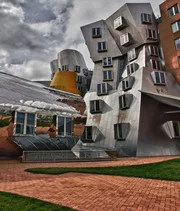
In 2004, Charles Marsteller Vest resigned from MIT, and Susan Hockfield was appointed to the position of president. Susan Hockfield was the first biologist and the first woman to hold this office.
She introduced the concept of ‘Convergence’ to bring together the physical sciences, biology, and engineering to work collaboratively.
During her tenure, the David H. During her tenure, President Susan Hockfield established the Koch Institute for Integrative Cancer Research. Here, engineers and cancer researchers worked together under one roof.
The Role of several President in the History of MIT: The Surrounding of MIT
Located on the banks of the Charles River, the modern Cambridge campus offers a scenic natural environment that provides a refreshing atmosphere for students amidst their studies.
Right next to MIT lies “Kendall Square,” one of the world’s most influential innovation hubs, where major tech giants like Amazon, Google, and Microsoft have their offices.
Being situated by the Charles River, the “Esplanade” area is highly popular for walking and running, offering a diverse and vibrant experience for the students.