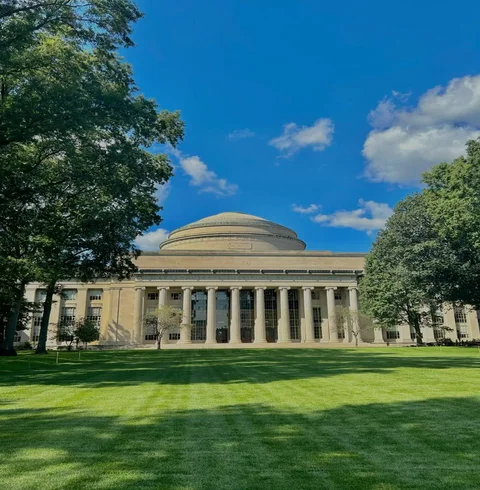
The Massachusetts Institute of Technology (MIT) History
What is the Massachusetts Institute of Technology (MIT) History? At the time of the Massachusetts Institute of Technology’s (MIT) founding, among the students, located in Boston, there were even a good number of students who believed that funding technology research at a newly independent institution that was properly developed and the oldest university was the right choice-or were they indifferent about these matters.
One of the main reasons MIT did not receive financial aid at that time and could not expand its campus significantly was the “Lawrence Scientific School” at Harvard University.
What roles did the Presidents play in the development of MIT? When Harvard University President Charles William Eliot proposed merging the two schools, MIT founder Rogers rejected it. President Eliot made more than five such attempts to merge MIT and Harvard.
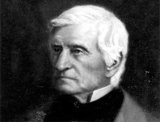
What is the Massachusetts Institute of Technology (MIT) History? After Walker became President, he faced several financial problems. Consequently, members of the corporation lobbied the Massachusetts Legislature for a $200,000 grant, and after discussions in the legislature in 1887, a grant of $300,000 was provided over approximately two years.
Amasa Walker believed that putting excessive pressure on students was not right; therefore, he reduced the academic burden on them. To foster student development, he supported the launch of programs such as the Technology Club, as well as electrical, marine, gymnasium, chemical, dormitory, and sanitary engineering initiatives.
Due to Amasa Walker’s policies, the number of students during his tenure increased from 302 to 1,198, and the institution’s permanent fund grew by more than 12 times.
This transformed MIT into one of the world’s leading universities in science and research. After President Walker, “James Mason Crafts” assumed the presidency of MIT in 1897.
Crafts was a chemist; he emphasized theoretical knowledge and research, expanding opportunities for practical research for students, which led to rapid advancements in chemical research.
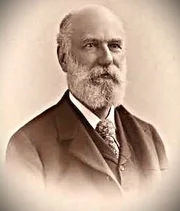
After Crafts, Henry Smith Pritchett joined as President in 1900. Henry supported transforming scientific research into a full institutional structure and advocated for the introduction of a pension system for teachers.
After serving at MIT from 1900 to 1907, he became the head of the Carnegie Foundation. In 1909 , Richard Cockburn Maclaurin took over the responsibilities as the President of MIT.
When he took charge of the Boston-based university, it was in a severe financial crisis and under intense pressure to merge with Harvard University. During this time, using his exceptional diplomatic skills, Maclaurin contacted George Eastman (the founder of Kodak).
Between 1912 and 1920, he secured nearly $20 million in donations. With this funding, he strategically relocated the campus from Boston’s Back Bay to the Cambridge campus in 1916.
Maclaurin believed that without a strong and modern infrastructure, MIT could not become world-class. By moving MIT to Cambridge, he saved it from merging with Harvard. Subsequently, thousands of students joined the university.
In 1917, more than 47 students arrived for an eight-week training program in subjects such as naval science, aeronautic engines, electricity, aircraft instrumentation, navigation, flight theory, photography, signaling, and weaponry handling.
For this, they were charged $10 for the first four weeks and $5 per week thereafter, excluding bedding and linens. In 2018, the university received 33,240 applications for admission, out of which they admitted more than 1,361 students. In 2019, undergraduate and advanced degree programs were conducted across all departments of the university.
During this time, more than 29,111 applications were received, and over 5,978 students were admitted into various programs, including Undergraduate, Masters, and PhD.
To match Eastman’s donations and cover the shortfall in lagging state support, President Maclaurin launched an industrial funding model called the “Technology Plan” in 1920. Today we know this Cambridge campus as “New Tech.”
Which was previously known as “Boston Tech” during its time in the city of Boston. After relocating the campus to Cambridge, new federal basic research, military branches, and private industrial organizations extended their cooperation.
As a result, MIT’s momentum increased rapidly, making it one of the premier institutions for higher education, scientific, and technological training.
MIT’s Surrounding Environment: However, several types of stones were found during the construction of the Great Dome and Maclaurin Buildings of the former Boston-based campus, such as: (1) “Indiana Limestone” in the iconic gray buildings of the campus, (2) solid “Granite” used for building the foundations of many MIT structures, (3) several modern buildings that have now been constructed using steel, concrete, special red bricks, and glass, and (4) “Roxbury puddingstone” used in some parts of the campus or landscaping in both Cambridge and Boston.
Since the modern campus in Cambridge is located on the banks of the Charles River, a pleasant natural environment is created for the students amidst their studies, making them feel very vibrant. Right next to MIT is “Kendall Square,” one of the world’s most influential innovation hubs, where offices of major tech giants like Amazon, Google, and Microsoft are located.
Since the campus is located on the banks of the Charles River, the “Esplanade” area is quite popular for walking or running, providing a diverse and enriching experience for the students.
During that time, MIT faced a severe lack of financial support, and a major reason it was unable to significantly expand its campus was the presence of the “Lawrence Scientific School’ at Harvard University. When Harvard University President Charles William Eliot proposed a merger of the two schools, MIT founder Rogers rejected it. President Eliot made more than five such attempts to merge MIT and Harvard.”
“After Walker became President, he faced several financial difficulties; consequently, members of the Corporation lobbied the Massachusetts Legislature for a $200,000 grant. Following discussions in the legislature in 1887, a grant of $300,000 was provided over approximately two years.”
President Amasa Walker, seeing the excessive academic pressure on the students, was forced to acknowledge with conviction that placing such a heavy burden on them was entirely wrong. Therefore, to relieve the students from excessive academic strain, Walker reduced their academic load.
To foster student development, he supported the launch of various programs, including the Technology Club, as well as Electrical, Marine, Chemical, and Sanitary Engineering, along with a gymnasium and dormitories.”
Following President Walker, James Mason Crafts assumed the presidency of MIT in 1897. Crafts was a chemist who emphasized theoretical knowledge and research, expanding practical research opportunities for students, which led to rapid advancements in chemical research.
“After Crafts, Henry Smith Pritchett assumed the presidency in 1900. Henry advocated for transforming scientific research into a full institutional structure for faculty and supported the introduction of a pension system for teachers. After serving in his position at MIT from 1900 to 1907, Henry became the head of the Carnegie Foundation.”