
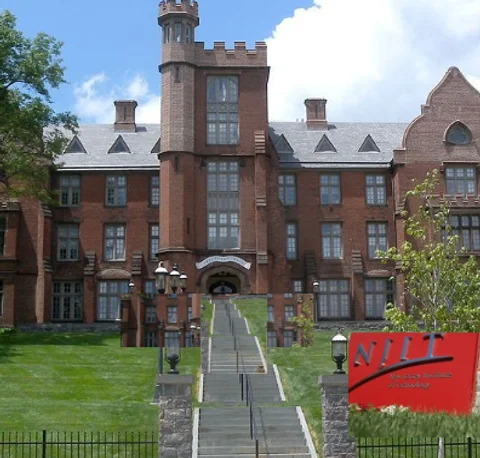
The New Jersey Institute of Technology (NJIT) in Newark has played an important role in the United States, scholarship, research, labs, campuses, science, technology, engineering, mathematics, architecture and computer science, etc.
New Jersey Institute of Technology has become one of the largest campuses in the United States, and today New Jersey Institute of Technology stands as a towering mountain in the world, the largest computing-intensive campus.
NJIT is one of the most prestigious universities in the United States, due to its high level of research activities, which has resulted in NJIT being designated as an R1 research institution.
New Jersey Institute of Technology graduates enjoy high pay rates along with preferred job placements, advanced AI-driven research, and a variety of advanced state-of-the-art laboratories that make NJIT one of the most technologically advanced universities in the United States.
New Jersey Institute of Technology History
We have heard a lot about the New Jersey Institute of Technology in Newark, but I, Yasmina Khatun, am going to describe in detail what I know about New Jersey Institute of Technology History.
At that time, it was not easy for New Jersey Institute of Technology to educate and graduate all the young men and women. However, at the beginning of the operation of the Newark Technical School, all the graduates here came to school in the evening and this school was also rented for a while.
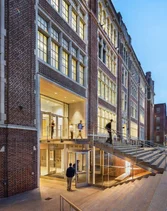
As a result, the school soon became insufficient to operate and organize all the students. Then, everyone came together to start raising funds to meet the needs of the Newark Technical School.
In 1886, seeing the school’s growth, Dr. Charles A. Colton led the construction of a three-story building at the junction to High Street and Summit Palace, which was previously named “Weston Hall”.
A year later, in 1959, the old “Weston Hall” was demolished to make way for a new seven-story building to house doctoral programs. After 1965, four buildings were constructed on the entire 18-acre site (completed 1966).
One of the goals of the New Jersey Institute of Technology was to establish a dedicated residential campus. After 1981 to 2002, four more schools and colleges were established here: (1) Albert Dorman Honors College, (2) School of Management, (3) College of Science and Liberal Arts, and (4) the College of Computing Science.
The complex will include a residential housing complex with more than 595 beds for undergraduates, a dining facility, an Honors College residence hall, several duplexes, retail, and a fitness center.
Currently, this New Jersey Institute of Technology public polytechnic university is serving about 11,000 to 12,000 students, including postgraduate, undergraduate and doctoral programs, due to which New Jersey Institute of Technology has taken a high position and has reached a high level of graduates by offering more than 2,174 degrees in computer, management, mathematics, information science, commerce, architecture, engineering and doctorates, etc.
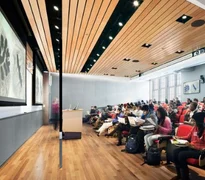
Many graduates are studying at the New Jersey Institute of Technology in Newark at a very affordable price. However, the education is given very strictly because the teachers here know that the students will stand on their own feet in a certain self-reliant way after receiving all the education they will provide.
The New Jersey Institute of Technology has more than 139 student organizations including roboties club, dance team, football team, volleyball team, basketball team, cultural team, coding society, networking etc.
Extracurricular education is included in the education. Currently, New Jersey Institute of Technology has six schools, colleges, and approximately 5,000+ elementary and secondary school students and teachers, serving a high level of excellence.
Today, New Jersey Institute of Technology is rapidly advancing in in technology—which includes the College of Architecture and Design, School of Management, Drone Design, Computing and Cybersecurity Research, College of Computing Sciences, Robotics, and multiple engineering labs, among others.
Furthermore, New Jersey Institute of Technology has established its place among other world-renowned American universities by constructing Newark College of Engineering, High School, College of Science and Liberal Arts, Residence Halls, STEM Center, Albert Dorman Honors College, Information Technology, New Jersey Institute of Technology Makerspace, Swimming Pool, providing a skilled workforce to the government, large sports venues, and fitness centers.
The engineering, mathematics, architecture, and STEM programs at New Jersey Institute of Technology in Newark are becoming increasingly complex and challenging for undergraduates.
However, while these subjects are difficult and challenging, they are also very beneficial for students because the advanced tools that students learn here are completely applicable in real life.
Currently, the campus construction at New Jersey Institute of Technology has increased considerably, with science, microelectronics, engineering, etc. being added here, which is why you are going to get the main benefits of doing research here.
New Jersey Institute of Technology: Lab or Center
Today New Jersey Institute of Technology is racing forward at a rapid pace, which has enabled NJIT to successfully establish numerous institutes, centers, and labs. The names of some of these centers, institutes, and labs are given below:
New Jersey Institute of Technology Labs: The labs established by the New Jersey Institute of Technology are: Biological Reactions and Processes Laboratory, Geomechanics for Geo-Engineering and Sustainability Lab, Advanced Materials and Engineered Surfaces in Extreme Environment Lab, Functional Materials and Biomedical Devices Laboratory, Method Development and Materials Simulation Lab, Applied Electrohydrodynamics Lab, Tissue Innervation and Muscle Mimetics Laboratory, Biophotonics and Bioimaging Laboratory, Nanomedicine and Healthcare Biomaterials Laboratory, Directional Biomaterials and Additive Manufacturing Laboratory, etc.
In addition, Nanotechnology in Sustainable Environment and Agriculture Lab, Facial Recognition and Video Processing Laboratory, NATO Lab, Automation and Robotics Laboratory for Social Good Lab, Nanoelectronic Materials and Devices Lab, Dynamical Systems and Robotics Lab, Assistive and Intelligent Robotics Lab, Engaging Agents Lab, Learning-Based Decision Making Lab, and Virtual Technology Applications Lab for Human Simulation are notably present here.
Institutes and Centers: Apart from various types of labs, the New Jersey Institute of Technology has been able to establish many institutes and centers. All these are: Rehabilitation Robotics Center, Cybersecurity Research Center, Center for Computational Heliophysics, Microfabrication Innovation Center, Visual Computing, Center for Membrane Technologies, Center for Applied Mathematics and Statistics, Technology and Society, Center for Advanced Materials Mechanics, Center for Big Data, and Information Science Institute, etc.
Initially, New Jersey Institute of Technology was not very good in terms of rankings, but since 2017 , NJIT has done a good job in terms of rankings and received great reviews, ranking New Jersey Institute of Technology at number 10 among the top 20 universities in the Northeast.
New Jersey Institute of Technology is currently ranked 27th among the top 50 universities in 2025 in terms of public schools and colleges with value for money.