
Advanced Technologies and Teaching Methods
What Advanced Technologies and teaching methods are needed to transform an ordinary high school into a top-ranked high school? If a school wants to improve its education system at present, it must first move away from its old teaching methods, technological infrastructure, and traditional role-learning practices.
The educational practices of running after common questions in the hope of finding them in examination papers, chasing high marks in examinations, reading lessons, and so on, must be completely eliminated.
This is because, in today’s modern era, educational boards do not look only at a school’s buildings and infrastructure; they also assess how practical the students are, how they think, and whether the students are receiving appropriate, up-to-date education.
STEM and Project-Based Learning Through Advanced Technologies and Teaching Methods
We all know that in ordinary high schools, Science, Technology, Engineering, and Mathematics-the four subjects-are taught separately. However, if an ordinary high school is to be brought to a top-level position, these four subjects must be taught in an integrated manner rather than separately.
In addition, if subjects such as Literature, Arts, etc., are integrated with STEM and taught together, students’ thinking, creativity, and problem-solving abilities can increase many times over.
At least 30% of students’ assessments must be conducted through practical projects. Practical projects may need to be included in every subject, such as teaching geometry in mathematics by measuring the school’s playground and calculating its area, or by creating a layout of a field. As a result, students’ tendency toward practical learning in their studies gradually increases.
The Harkness Method, Dialogic Learning, and Design Thinking
Currently, by adopting these methods, the American preparatory school “Phillips Exeter Academy” has secured the number one position in the field of education.
Unlike other conventional schools, classes here are not conducted using traditional tables and benches. Instead, a large oval-shaped wooden table is placed in the classroom, around which 12 students sit with one teacher.
Unlike other conventional schools, teachers here do not teach through traditional lectures. Instead, teachers and students engage in mutual debates and discussions on historical events, complex philosophical theories, scientific hypotheses, and various other subjects.
As a result, all the students present in the classroom are required to participate in these debates and discussions on various topics. This stimulates the students’ Prefrontal Cortex and increases their skills in critical thinking, Socratic questioning, logical analysis, and public speaking by 10 times compared to students at any other school.
The school must conduct at least one or two such discussion- and problem-solving-based classes every week. As a result, students are not limited to acquiring knowledge from textbooks alone; rather, they develop the ability to analyze a subject in depth, raise questions, express their opinions through logical reasoning, and evaluate the opinions of others.
Teachers and students must take responsibility for solving environmental pollution and other problems within the school or in its surrounding areas. For example, they can work on how to reduce plastic waste at school and how to keep the school and its surrounding environment cleaner and tidier.
Students will work in groups to solutions to these problems or develop new ideas and present them to their teachers. As a result, students’ practical skills, teamwork experience, creativity, and thinking abilities will increase significantly.
AI-Powered Adaptive Learning and Precognitive Tracking Methods
I, Yasmina Khatun, have observed that today, America’s top schools do not view technology merely as a device; rather, they also consider it a “Cognitive Assistant” in the learning process of students (for example, Eton College).
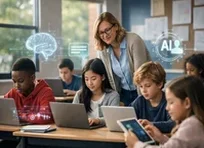
In this type of educational system, each student is provided with an AI-powered Adaptive Learning Platform. When students work on mathematics and physics or attempt to solve complex problems, the AI tracks them and monitors their learning processes and working patterns.
For example, it develops patterns by examining how students move their pupils, how they work with a mouse, the speed of their mouse clicks, and instances in which they provide incorrect answers.
It analyzes all kinds of information to identify the types of problems that students repeatedly struggle to solve. Through this technology, it is possible to identify students’ underlying learning weaknesses, their problem-solving methods, their patterns of attention, and the subjects they find most difficult to understand.
This system sends the teacher a Precognitive Analysis Report, through which the teacher can learn which subjects the student is paying close attention to, which formulas the student has memorized, and where the student has gaps or weaknesses, etc. As a result, before entering the classroom, the teacher can determine how to guide each student.
Deep-Tech Laboratories and Quantum Curriculum
There are many high schools in the United States, such as Thomas Jefferson High school for Science and Technology (TJHSST), where students have access to research facilities similar to those at the University level.
Here, students directly conduct research-based work in laboratories to modify the DNA sequences of bacteria, observe whether it is safe, what its potential effects are, and what changes may occur as a result.
In addition, these schools have modern research equipment in their innovation labs, such as basic 3D printers, Computational Physics Simulation Tools, Micro-fluidics Labs, and Gene-splicing (CRISPR) kits, etc.
As a result, students have the opportunity to conduct university-level research on various subjects while still in high school, enabling them to develop their research-based thinking, innovative ideas, and scientific skills.
Advanced Technologies and Teaching Methods: Thermal Comfort and Neuro-Architecture
The buildings and campuses of top schools in the United States and the United Kingdom are designed with the utmost importance placed on ensuring that the effects of heat and airflow on the human nervous system can be easily controlled.
Scientific research has shown that if the level of carbon dioxide (CO₂) in a classroom exceeds 1,000 Parts Per Million (PPM), students’ learning abilities, the brain’s decision-making abilities, and concentration, etc., can decrease by approximately 50% in terms of decision-making ability.
Therefore, the classrooms on these campuses are designed with “Displacement Ventilation Systems” and natural airflow to keep CO₂ levels below 700 ppm, allowing the room temperature to be maintained precisely between 20-22 degrees Celsius. This temperature is scientifically considered the most ideal for maintaining the brain’s performance over extended periods.
Acoustic Isolation and Soundscape Engineering
We all know that institutions such as Winchester College in Britain consider silence to be an absolute and valuable resource. This is because when unnecessary noise reaches a person’s ears, it creates micro-stress, which significantly slows down their attention, concentration, and learning ability.
Therefore, special vibration-absorbing materials and double-glazed “Acoustic Glass” should be used in the external corridors and outdoor walkways of these campuses to completely filter out all kinds of external noise.
By artificially creating pleasant natural “positive soundscapes” in different parts of the campus, such as small waterfalls and bird calls at various frequencies, it may be possible to bring students into a deep study mode. As a result, students will regain a mentally peaceful environment in which they can study with concentration.
Technological Infrastructure and Laboratory Renovation
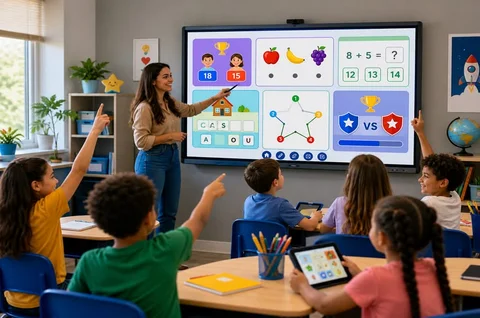
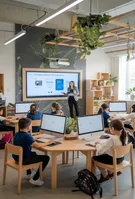
What advanced technologies and teaching methods are needed to transform an ordinary high school into a top-ranked high school? Ordinary boards in every classroom must be replaced with large touchscreen smartboards, where teachers can use 3D smart models and animations, i.e., videos, to explain human anatomy, space science, various scientific subjects, and all other projects to students very easily.
A customized Learning Management System (LMS) compatible with various Google technologies and services, along with a dedicated school app, must be developed for the school.
Through these platforms, teachers can upload recordings of their classroom lectures. As a result, if a student is unable to attend school due to illness or any other reason, they will be able to watch those recordings at home, continue studying the lessons, and submit their assignments to the school on time.
A modern technology-based laboratory must be established within the school, equipped with various modern technological tools such as Arduino, 3D printers, Raspberry Pi, drone kits, different types of microcontrollers, laser cutters, and basic coding tools, etc.
In addition, high-configuration computers, high-speed optical fiber internet facilities, and specialized arrangements for data science, artificial intelligence (AI), and app development must be introduced.
A section of the laboratory must also be equipped with VR headsets, and another language-learning lab must be established to help students develop international communication skills at various levels by learning English and all other global languages (such as German, Russian, Italian, Chinese, Arabic,etc.) proficiently.
Headsets and speech-recognition software must be integrated into this lab to improve pronunciation, conversation, and language skills. As a result, students will not be limited to reading theoretical concepts from textbooks alone; they will also be able to build sensors, various types of gadgets, robots, and other devices.
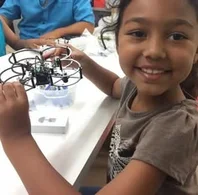
When the school becomes capable of developing AI models or building drones among its students, no one will be able to stop this ordinary high school from reaching the top.
Advanced Technologies and Teaching Methods: “Smart Control” and Policies
To make the school’s education system more effective and dynamic, AI-powered software must be installed. Through this software, it will be possible to regularly monitor students’ classroom attendance rates, academic progress graphs, and study performance.
If a student suddenly falls behind, the system will send an alert and provide input regarding changes in the student’s psychological behaviour, etc. In this way, by regularly monitoring students’ progress and development, it will be possible to take prompt and appropriate measures to help them move forward.
Advanced Technologies and Teaching Methods: Digital Library Kiosk
Alongside physical books, a modern digital library system must be established in the school’s library. Tablets and Kindle stations must be installed here. Students will have free access to the world’s largest e-libraries and scientific journals according to their needs. As a result, if any student faces financial limitations, they will no longer be deprived of opportunities to acquire knowledge.
Cybersecurity and Firewall
A strong Wi-Fi-powered computer network must be established throughout the school, with secure firewall protection and child-lock security enabled. All activities unrelated to education (such as gaming, social media, and other entertainment websites) must be completely blocked. This arrangement will make the school’s digital environment safer, more controlled, and more conducive to learning.